
Taking photos of an incandescent lamp burning out
Taking stock images every day can get a bit wearing, and so I sometimes try something a bit more adventurous – who knows if it will ever sell! I decided to try taking an image of an incandescent lamp with the glass removed and the filament burning out. I thought it might have some interest when these types of inefficient bulbs are taken off the market. There is a great site from back in 2007 about this topic which gave me the idea and background. I decided to photograph the various steps – breaking the light with a hammer was step one!
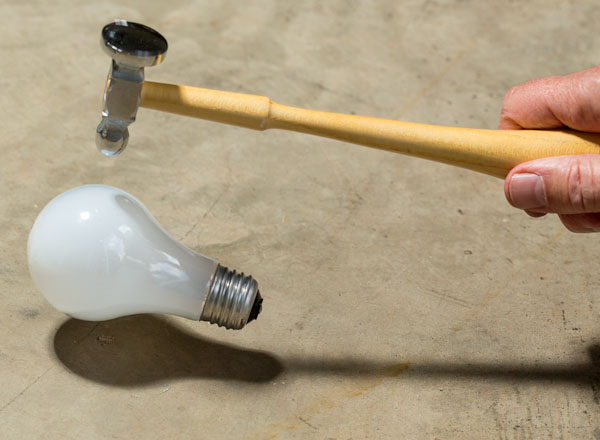
Attempt one – a bouncing light bulb
Do this at your own risk, but I decided to wear some protective glasses and gloves and hit the bulb on the garage floor, and have a flashgun and camera set to multiple exposures. I triggered a series of shots and tried to break the glass without breaking the filament inside. Funny how a glass bulb can bounce!
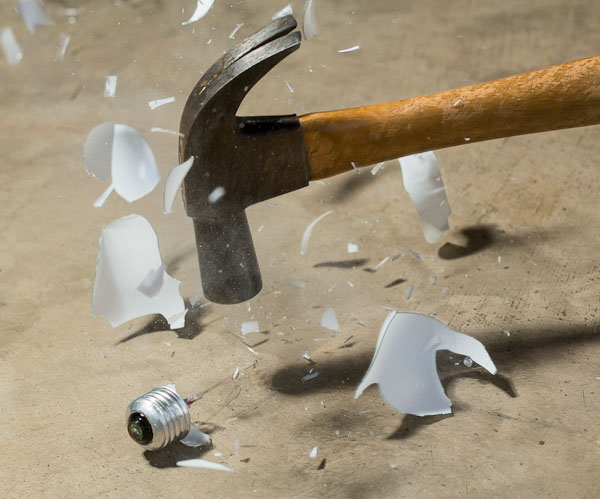
A bit too hard
Then, trying a bigger hammer, I managed to get a great shot of glass flying around, but unfortunately the filament went with it. Attempt three was pretty similar, but then I managed to hit the bulb just right (and capture the moment of impact) with this third shot.
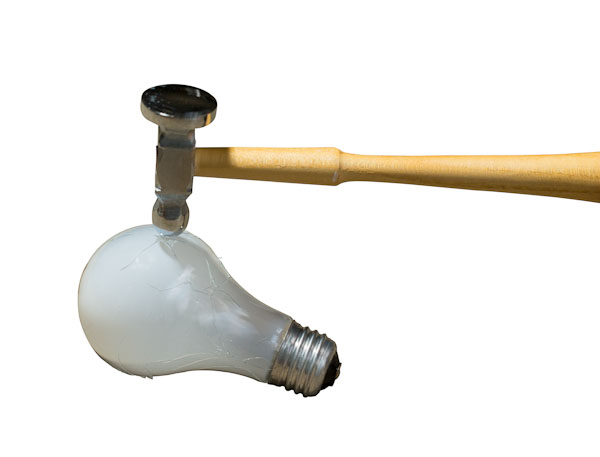
Success – start of the cracking of the light bulb
I decided to extract this one from its background using a path created with the pen tool in Photoshop. It isn’t as sharp as I would have hoped, but it will probably be OK at a small size. This one actually cracked quite nicely and left the intact filament and a little shard of glass to help identify what we are looking at.
Then to the inside studio. I carefully unplugged a table lamp, and screwed the bulb into the holder – avoiding the shard of glass. I set my camera up with the 100mm macro lens to get some distance from the bulb, and set a black card about 2 feet behind the bulb. In retrospect, a bigger distance would have been a bit better as the lamp cast a bit of light on the backdrop. I did use a flashgun set up at 1/16th power to light the smoke, although I’m not sure it was necessary as the burning filament gives out quite a lot of light.
I set my exposure at 1/200 at F8 with ISO400. The 1/200 speed is the maximum for flash synchronization on my Canon. If/when I try this again, I’ll not use the flash and use a faster shutter speed. The overall exposure seems to be in the right ball park though. I had a switch in my electric cable to the lamp, so I started the camera on multiple shots and then switched on the bulb. It lights brightly and burns out in about 2 seconds (probably a lower wattage bulb lasts longer?) and continues to smoke for a while after that.
Finally, I edited the image in Photoshop and added a red “photo filter” for the smoke with a graduated mask to avoid it coloring the lamp base. All told, I got two good images out of the series, but I think I will try this again with a horizontal filament, or perhaps set up a small fan to send the smoke out to the side as the next experiment.
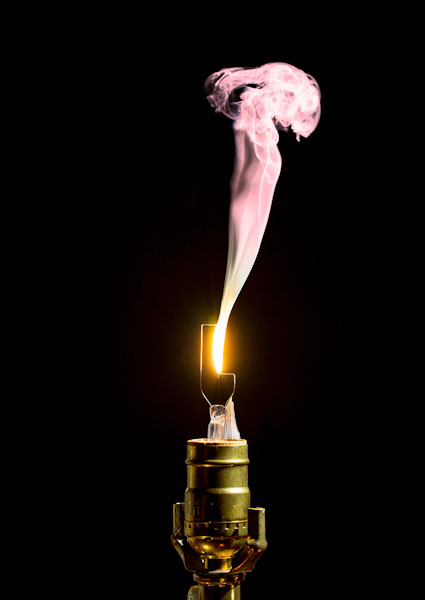
Success
(Visited 339 times, 1 visits today)